Why Financial Education Books Are Important for Beginners

Building a Strong Financial Foundation
Starting a journey toward financial independence can feel overwhelming. With so many investment options, budgeting strategies, and economic terms, beginners often wonder where to turn. Financial education books provide a structured, self-paced way to learn the essentials of money management. They offer proven principles from authors who have studied markets, behavior, and personal finance for decades. Unlike online snippets or quick videos, books deliver depth and context that help readers build lasting habits. For anyone opening their first brokerage account or simply trying to get out of debt, reading a well-chosen book can be the first step toward confidence and control.
Financial literacy is not an overnight skill. It requires understanding concepts like compound interest, risk diversification, budgeting, and the psychology behind spending decisions. Books allow beginners to learn at their own pace, revisit challenging chapters, and absorb material gradually. Many financial education books start with the basics, making them ideal for those with no prior knowledge. They also help readers avoid common mistakes by learning from the experiences of others. A solid foundation built from quality books can prevent costly errors later in life, such as taking on too much debt or falling for investment scams.
Recommended Financial Education Books for Adults
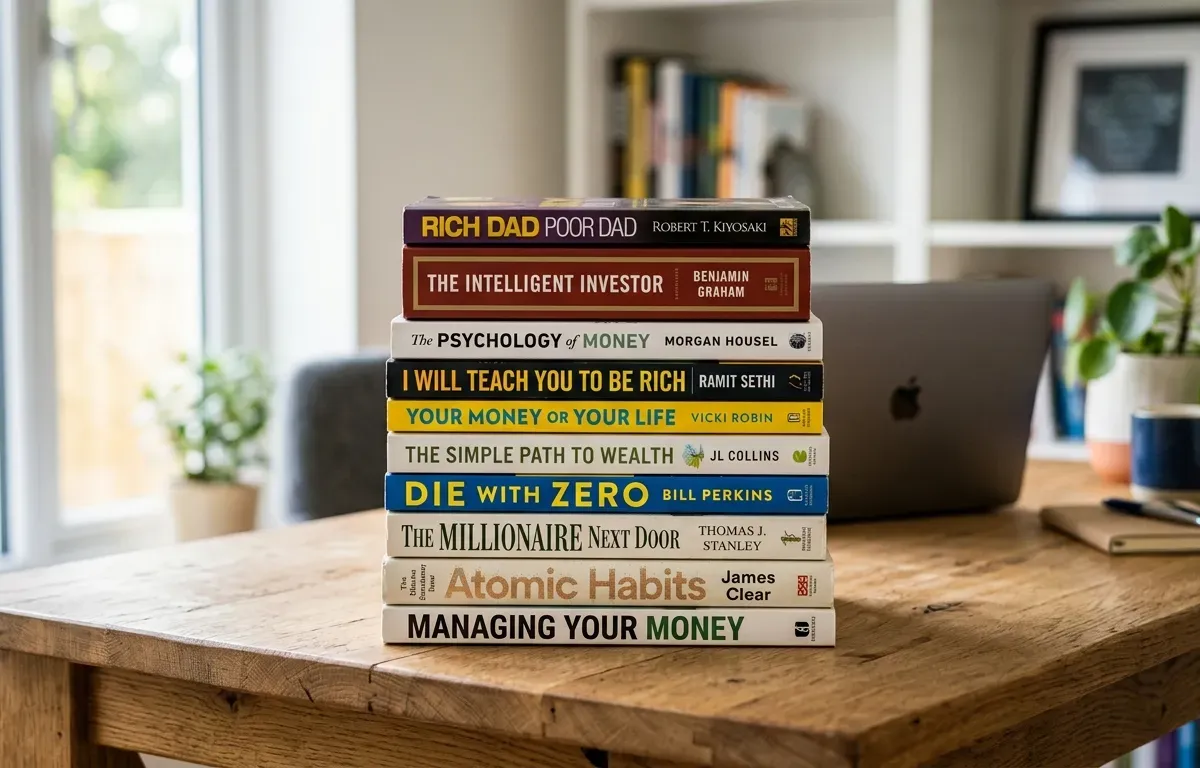
Several well-regarded titles consistently appear in curated lists of financial literacy books for adults. Clearview Federal Credit Union recommends books such as The Simple Path to Wealth by JL Collins, The Psychology of Money by Morgan Housel, Get Good with Money, I Will Teach You to Be Rich (Second Edition) by Ramit Sethi, and The Algebra of Wealth by Scott Galloway. These titles cover a range of topics, from straightforward investing advice to the behavioral aspects of money. The American Library Association (ALA) LibGuide, funded by the FINRA Investor Education Foundation, includes The Algebra of Wealth, Millionaire Mission by Brian Preston, and Make Money Move in its general personal financial management list. The ALA guide is considered an authoritative source due to its funding and professional curation. Additionally, The Index Card is frequently mentioned by online communities like Reddit's r/personalfinance as a beginner-friendly book that simplifies financial rules into a single index card.
Each of these books offers a different emphasis. The Simple Path to Wealth focuses on low-cost index fund investing and financial independence. The Psychology of Money explores the emotional side of money decisions. I Will Teach You to Be Rich provides a six-week program covering banking, savings, budgeting, and investing. The Algebra of Wealth breaks down the components of financial success. For readers interested in the intersection of technology and finance, AI Investing for Dummies by Paul Mladjenovic (2024) is listed under Artificial Intelligence and Finance in the ALA LibGuide. Beginners should consider their personal goals and learning style when choosing among these options.
Books for Teaching Kids About Money
Financial education is not just for adults. Teaching children about money early sets them up for responsible habits later. Several books are specifically written to introduce young readers to earning, saving, and spending. Clearview FCU and SNB Online both recommend The Berenstain Bears' Trouble with Money, a classic that uses beloved characters to explain basic financial concepts. Clearview also lists The Berenstain Bears' Dollars and Sense, One Cent, Two Cents, Old Cent, New Cent, Bunny Money, Money Skills for Kids, and I Am Money. SNB Online includes the Moneybunny Book Series and Financial Peace Jr. in its top 10 financial literacy books for kids. These resources make learning about money fun and accessible for different age groups. Parents can use these books as conversation starters to discuss allowances, saving goals, and the difference between wants and needs.

How to Choose the Right Financial Education Book
With many titles available, beginners may feel unsure where to start. The best approach is to match the book to your current knowledge level and specific needs, a process we walk through step by step in our guide to choosing the right financial education book for your goals. If you are completely new to personal finance, books like The Index Card or I Will Teach You to Be Rich offer straightforward, actionable advice. If you want to understand why people make financial mistakes, The Psychology of Money is a strong choice. For those focused on long-term investing, The Simple Path to Wealth provides a clear strategy. The ALA LibGuide is a reliable resource for finding curated lists because it is funded by the FINRA Investor Education Foundation, meaning the recommendations are vetted. Avoid relying solely on commercial lists or social media opinions, as they may be biased. Reading multiple books over time can give you a well-rounded perspective. Many libraries offer these titles for free, allowing you to sample them before purchasing.
The Role of Books in a Broader Learning Journey
While books are an excellent starting point, they work best as part of a larger financial education plan. Practical experience, such as tracking your spending or practicing with a trading simulator, reinforces concepts learned from reading. Some readers benefit from joining a community of learners where they can ask questions and share insights. Structured courses and live sessions can provide real-time guidance that books alone cannot offer. For working professionals, especially those in tech, military, or biotech fields, balancing self-study with interactive learning can accelerate progress. However, books remain a foundational tool because they are high-quality, affordable, and available anytime. They also encourage deep thinking and reflection, which is essential for changing long-term money habits.

Frequently Asked Questions
Which financial education book should I read first as a beginner?
If you have never read a personal finance book, start with one that covers the basics in a simple, actionable way. Many beginners find The Index Card helpful because it distills key financial principles into nine simple rules. Others prefer I Will Teach You to Be Rich for its step-by-step program. Choose a book that matches your current comfort level with money topics.
Are there any financial education books recommended for children?
Yes, several books are designed specifically for kids. The Berenstain Bears' Trouble with Money is a popular choice that teaches earning, saving, and spending. Other titles include Financial Peace Jr. and the Moneybunny Book Series. These books make money concepts fun and easy for young readers to understand.
How do I know if a financial book is trustworthy?
Look for books that appear on curated lists from reputable organizations. The American Library Association's LibGuide, funded by the FINRA Investor Education Foundation, provides vetted recommendations. Credit unions and educational institutions also offer reliable lists. Be cautious of books that promise quick riches or require you to buy additional products.
Can one book teach me everything I need to know about personal finance?
No single book covers every aspect of personal finance. Each title focuses on different areas, such as investing, budgeting, or the psychology of money. Reading several books over time gives you a more complete understanding. Combine book learning with practical application and, if possible, guidance from a qualified financial educator or advisor.
Start Your Financial Education Journey
Reading financial education books is one of the most practical steps you can take to build money confidence. Whether you're just starting out or looking to deepen your knowledge, the right book can transform how you think about earning, saving, and investing. The authors and resources mentioned in this guide have helped thousands of people take control of their finances. For a wider roundup organized by reader age, browse our best books on financial education for kids, teens, and adults.
Ready to take the next step? Conectiv offers comprehensive financial education programs designed to complement independent learning with live trading sessions, expert guidance, market analysis tools, and access to a thriving community of learners. Through Conectiv's membership platform, you can combine book knowledge with hands-on experience, structured courses, and real-time market education. Wire Clarity, a representative community within Conectiv, provides access to these resources and personalized support.
To learn more about Conectiv's financial education programs, trading tools, live sessions, and membership options, visit Conectiv or contact the team at Wire Clarity at (770) 628-5463 or info@wireclarity.com.