Paper Trading for Beginners: Practice Before You Invest
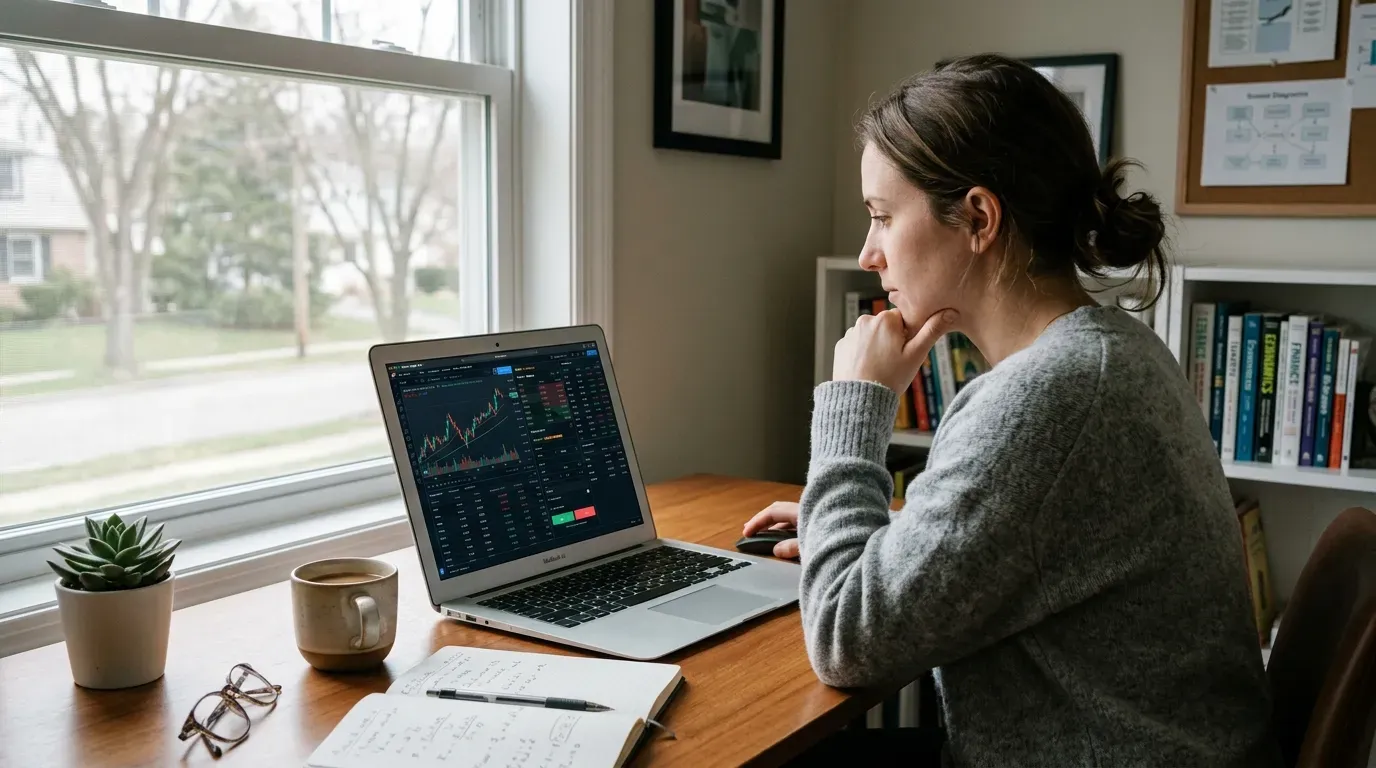
Learning to trade involves more than reading about markets. You also need to practice the actions you will take, from placing an order to managing a position through normal ups and downs. Paper trading gives you a structured way to do exactly that. It lets you practice trading with simulated money, test your ideas, and build experience without putting real capital at risk. For a beginner, this practice can be the difference between learning from mistakes and paying for them.
What Is Paper Trading?
Paper trading is a demo account that lets you practice trading with no deposits and no real money involved. Instead, you use virtual funds to place trades in close-to-real market conditions. The goal is simple: sharpen your skills and deepen your understanding of the financial markets before you invest real money.
Most platforms offer paper trading as a free simulator. Some provide around $100,000 in virtual funds to work with, while others let you trade a wide range of asset classes. The exact setup varies by platform, so it helps to review the details before you choose one. What matters most is that the experience mirrors real trading closely enough to be useful.
Why Paper Trading Matters for New Investors
New investors face a steep learning curve. You need to understand how markets move, how to read a chart, how to place an order, and how to manage risk. Paper trading removes the financial pressure so you can focus on those skills. It is widely used by beginners to learn the basics and by experienced traders to test new strategies before they commit capital.
Build Confidence Without Financial Risk
Confidence grows from repetition. Paper trading lets you repeat the process of evaluating a trade, entering a position, and watching it play out without the fear of losing money. Because there is no financial risk, you can make decisions more calmly and review them honestly afterward. That honest review is where much of the learning happens.
Learn How the Stock Market and Brokerage Platforms Work
A paper trading account is also a safe place to learn how an online brokerage works. You can use virtual money to sharpen your knowledge of how the stock market works and how to use the trading tools available to you. That includes placing market orders, setting limit orders, and reading the data on your screen without worrying about the cost of a mistake.

What You Can Practice With a Paper Trading Account
Paper trading supports more than just basic order placement. You can use it to define, test, and evaluate your trading strategies. That includes setting rules for your trades, practicing risk management, and testing your approach across different market conditions.
- Test trading ideas and build strategies with zero-cost practice.
- Practice stock and options trading with a free simulator.
- Use real options chains to practice options strategies.
- Trade across broad asset classes, including US stocks during regular hours, pre-market, after-hours, and overnight sessions.
- Practice with crypto and other instruments during weekend sessions where the platform supports it.
- Apply both technical and fundamental analysis to your trades.
Paper trading is not limited to a single asset class or a single strategy. Depending on the platform you choose, you can practice with stocks, options, and crypto, or focus on technical analysis, fundamental analysis, or both. The best approach is to use the simulator the same way you would use a live account, following your own rules from the first order to the final review.
Practice Risk Management Before You Need It
Risk management is one of the most important skills a trader can build. On a paper trading account, you can test position sizing, set stop-loss rules, and decide in advance how much you are willing to lose on any single trade. Practicing these habits with virtual money makes them easier to follow when real capital is involved.
Test Across Different Market Conditions
Strategies behave differently depending on what the market is doing. Some approaches work well in steady trends, while others are designed for choppy or volatile conditions. Paper trading lets you test your ideas across different market conditions without paying for the lesson. You can also use the simulator to practice during extended sessions, including pre-market and after-hours trading, which behave differently from regular hours.
How Paper Trading Reduces Emotional Risk
Emotions are one of the biggest obstacles for new traders. Fear can cause you to exit a trade too early, and overconfidence can lead to oversized positions. Paper trading lets traders practice strategies with simulated money without financial risk, which helps separate emotion from the decision-making process.
Because you are not risking real capital, you can adopt a calmer frame of mind and focus on the process rather than the outcome. Over time, that helps you build the kind of discipline you will need when real money is on the line. The goal is not to avoid emotion entirely, but to recognize it, name it, and manage it before it drives your decisions.
The Limitations of Paper Trading
Paper trading is a strong learning tool, but it does have limits. Simulated orders do not always behave exactly like real orders. Slippage, spreads, and fills can differ in a live market. And because no real money is at stake, you may not feel the same emotional pressure that comes with real trading.
That does not make paper trading less valuable. It simply means you should treat it as one part of your preparation rather than a perfect substitute for live markets. Use it to build skills and test ideas, then transition carefully with realistic expectations about what the simulator can and cannot teach you.
How to Transition From Paper Trading to Real Capital
The move from virtual funds to real money should be gradual. Start by setting clear rules for what you want to practice and how you will measure success. Keep a record of your paper trades, including the reasons behind each decision, and review that record to find patterns. If you cannot follow your own rules on paper, the issue is not the market. It is the plan.
When you do start trading with real capital, begin small. Use the same strategies and rules you practiced on paper, and treat your first real trades as a continuation of your learning. A trading journal can help you compare how you behave with real money versus virtual money, which is one of the most informative exercises a new trader can do.
Accountability is another reason the transition period matters. Practicing alone can hide blind spots, which is why many new traders benefit from a community of people who review their process and share feedback. A structured learning environment helps you turn paper trading practice into a repeatable routine rather than a one-time experiment.
Once you are ready to move beyond practice, you need an education path that supports your growth. Conectiv, the financial education and trading platform, offers structured on-demand courses and daily and weekly live market sessions across stocks, forex, crypto, indexes, and futures. Members also gain access to professional tools such as real-time market scanners, daily technical analysis reports, trade ideas and alerts, and trading calendars and journals. These resources are designed to help beginners and active traders alike build skills and stay accountable.
Conectiv is part of a publicly traded company, Investview, Inc. (OTCQB: INVU), which means the education and tools are delivered with institutional-level oversight. New members are protected by a 14-day satisfaction guarantee, so you can explore the platform with confidence while you continue to develop your approach.
Frequently Asked Questions
Is paper trading really free?
Yes, paper trading is offered as a free simulator by most platforms. It is a demo account that requires no deposit and uses virtual money instead of real capital. This makes it a low-pressure way to sharpen your skills, learn how the stock market works, and practice using an online brokerage before you invest.
How long should I paper trade before investing real money?
There is no fixed rule. Paper trading is useful while you are learning the basics, building confidence, or testing a new strategy. Many traders continue until they can follow their own rules consistently across different market conditions. When you move to real capital, start small and treat those first trades as part of your education.
Can paper trading prepare me for real market conditions?
Paper trading uses close-to-real market conditions, and many platforms provide real-time market data, so it prepares you well for many parts of trading. It helps you apply technical and fundamental analysis, practice risk management, and build confidence. However, real trading includes emotional pressure that a simulator cannot fully replicate, so use paper trading as one part of a complete preparation plan.
What tools should I learn alongside paper trading?
Practical tools like trading calendars, journals, market scanners, and technical analysis reports help you build discipline. Conectiv provides expert-led courses, live market sessions, real-time scanners, trade ideas, and alerts to support your learning. These tools work well alongside paper trading as you prepare to invest real money with confidence.
Ready to Build Your Trading Foundation?
Paper trading is the smartest way to develop real trading skills without risking your capital. Whether you're just starting out or refining your strategies, the insights and experience you gain from simulated trading will serve you well when you're ready to trade with real money.
Ready to get started with your trading education? Conectiv offers comprehensive financial education programs, live trading sessions, and professional trading tools that will accelerate your learning. Wire Clarity is here to help you connect with the membership and find the right plan for your goals.
Get started with Conectiv through Wire Clarity:
Or visit the Wire Clarity contact page to learn more about Conectiv membership tiers and financial education programs.