How to Use Paper Trading to Practice Without Risk

What Is Paper Trading and How Does It Enable Risk-Free Investment Practice?
Paper trading refers to the practice of simulating trades using virtual cash rather than real money. This approach lets traders test strategies, understand market dynamics, and make informed decisions without exposing themselves to financial risk. By engaging in paper trading, users benefit from a risk-free environment where they can practice various trading techniques, build confidence, and learn from their mistakes in a controlled setting. This method bridges the gap between theoretical knowledge and practical application, making it an essential component of investment education.
How Simulated Trading Platforms Support Learning Without Financial Risk
Simulated trading platforms come equipped with various features designed to enhance the learning experience. These platforms often include:
- Analytical Tools — Users can access performance tracking and analytical tools that help evaluate the effectiveness of their trading strategies.
- Structured Curriculum — Many platforms offer educational resources and tutorials that guide users through the complexities of trading.
- Community Support — Engaging with a community provides valuable insights, allowing users to learn from the experiences and strategies of others.
These features collectively support an immersive learning environment where traders can gain hands-on experience without the pressures that come with real money trading.

How to Start Using Demo Trading Accounts for Effective Investment Strategy Testing
Beginning with demo trading accounts is a straightforward process aimed at discovering the potential of various investment strategies. Here's how you can start effectively:
- Choose the Right Platform — Select a trading platform that offers a demo account with features that mimic live trading conditions. Platforms like Webull, TD Ameritrade, and E-Trade offer popular fake stock trading simulators where you can practice with virtual cash. Members of Conectiv—a comprehensive financial education membership backed by Investview, Inc.—gain access to integrated trading tools, real-time scanners, and professional-grade platforms as part of their membership, allowing you to combine paper trading practice with live market education and a global community of traders.
- Set Realistic Goals — Approach your practice with specific goals in mind, such as mastering a particular strategy or improving decision-making skills.
- Integrate Real Market Data — Many platforms allow you to use real-time data that can help you make informed trading decisions based on actual market conditions.
Engaging in this structured approach not only enhances your trading skills but also provides confidence for when you eventually transition to real investments.
Where to Practice Paper Trading
Finding the right place to practice paper trading is essential. You have several options depending on your preferences and trading style:
- Dedicated Paper Trading Platforms — Many brokers offer built-in paper trading or demo accounts where you can practice with virtual cash in realistic market conditions.
- Fake Stock Trading Simulators — These educational tools let you experiment with trading strategies without any financial stakes, making them ideal for beginners.
- Trading Community Platforms — Some platforms combine simulated trading with community features, allowing you to learn from other traders and share strategies.
Whether you're looking for where to practice paper trading or where you can practice trading with paper trading accounts, the key is finding a platform that matches your learning style and goals.
What Are Risk-Free Trading Methods and Their Benefits for Investors?
Risk-free trading encompasses various methods of practicing investing without the financial stakes associated with live markets. These methods include virtual trading, options trading, and utilizing paper trading accounts to simulate real-world conditions.
The key benefits of these trading methods include:
- Skill Development — Users can develop trading skills without the fear of financial loss.
- Emotional Discipline — Practicing in a risk-free environment allows traders to cultivate emotional resilience and make better decisions under pressure.
- Performance Tracking — Users can analyze their performance without financial repercussions, allowing for constructive feedback and improvement.
How Virtual Trading Builds Skills Without Real Financial Exposure
Virtual trading enables an environment conducive to learning, where users can hone their decision-making skills without the anxiety that accompanies real financial exposure. By repeatedly engaging in simulated trades, traders improve their analytical skills and emotional discipline—crucial traits for successful investing. The ability to experiment with various strategies fosters confidence, helping users approach actual trading with a well-prepared mindset. Virtual trading ultimately leads to better preparedness and effectiveness in real-life scenarios.
A recent study highlights the significant role of virtual trading platforms in enhancing both investment acumen and risk management proficiency among emerging traders:
Virtual Trading Improves Investment and Risk Management Skills
This study examines the effectiveness of virtual trading–based capital market simulations in improving high school students' investment and risk management skills, addressing the persistently low level of financial literacy among Indonesian adolescents. Using a quantitative approach with a quasi-experimental nonequivalent control group design, this research involved an experimental group that learned through virtual trading simulations and a control group that received conventional instruction. Data were collected through pretests and posttests and analyzed using normality and homogeneity tests, paired sample t-tests, and ANCOVA (a = 0.05). The results indicate that students who participated in virtual trading simulations experienced a significantly greater improvement in investment and risk management skills than those in the conventional learning group. These findings suggest that simulation-based learning enhances students' critical and practical thinking by providing experience.
— Enhancing High School Students Investment Skills and Risk Management Through Capital Market Simulation with Virtual Trading, M Wayudi, 2026
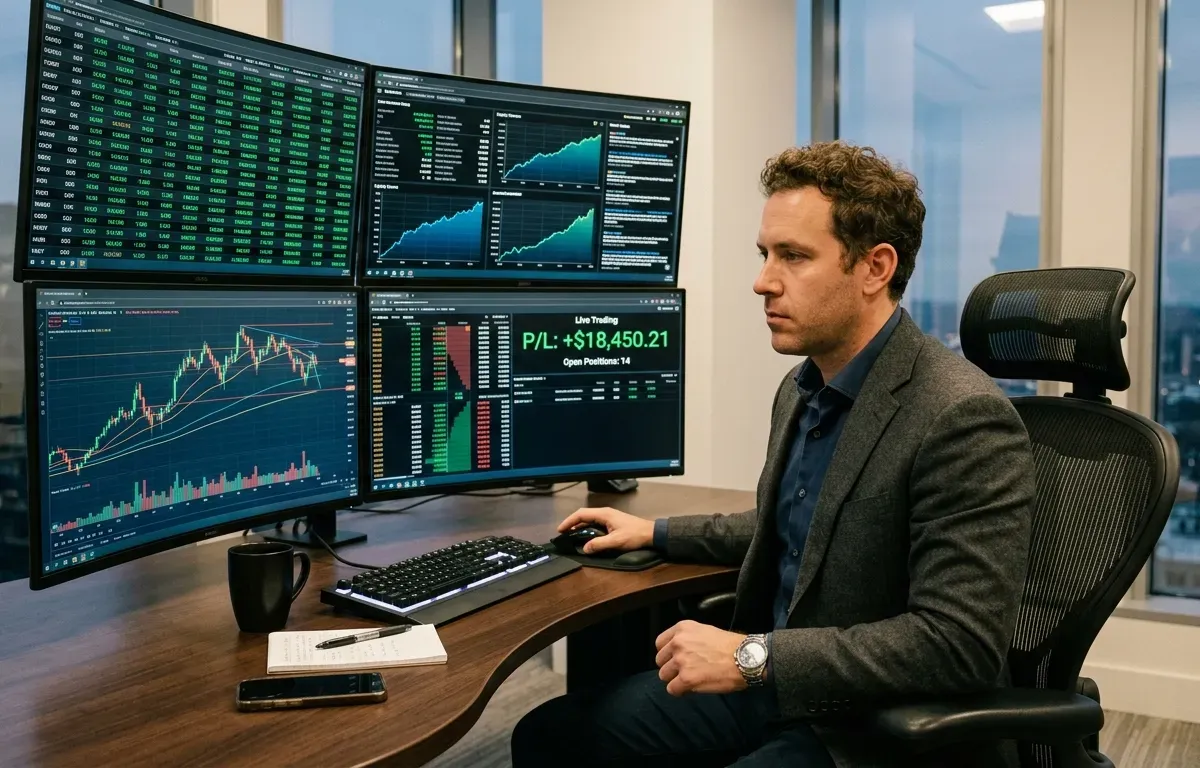
Which Tools and Platforms Best Support ESG-Based Simulated Trading?
When considering tools for simulated trading focused on sustainability, look for platforms that prioritize environmentally and socially responsible investing in their offerings. The best tools have features that allow users to analyze investments based on environmental, social, and governance criteria. Here are some criteria to consider when selecting these tools:
- User Interface — An intuitive design facilitates ease of navigation and enhanced learning.
- Data Analytics — High-quality platforms provide robust analytics tools that support strategy development and evaluation.
- Feedback Mechanisms — Effective tools offer comprehensive feedback based on simulated trading outcomes to help refine strategies.
Conectiv's trading tools and platforms are designed with these principles in mind, offering members real-time market data, performance analytics, and community feedback to support both paper trading practice and sustainable investment strategies. Wire Clarity is your dedicated representative group within Conectiv, helping you connect with the membership and get the support you need to build long-term financial confidence.
Demonstrating Impact Metrics Through Interactive Simulation Dashboards
Interactive dashboards provide users with live metrics reflecting the performance of their investment strategies. By defining key impact metrics, traders can visualize their progress and understand the effectiveness of their approaches.
Metric | Description | Value |
|---|---|---|
Trade Accuracy | Percentage of successful trades | 85% |
Profitability Ratio | Profit made versus total capital used | 1.5:1 |
Risk-Adjusted Returns | Returns adjusted for the level of risk taken | 10% |
This type of data aids users in making informed adjustments to their strategies as they practice within the simulated environment.
How to Measure Success and Learn from Investment Simulations
Measuring success in investment simulations involves understanding performance metrics that indicate how well strategies are functioning. Key performance indicators (KPIs) to monitor include:
- Return on Investment (ROI) — This metric helps assess the effectiveness of the trading strategy by measuring the profit generated concerning the investment made.
- Win Rate — This percentage indicates how many trades were profitable versus non-profitable trades.
- Drawdown — Understanding the maximum loss during a trading period provides insight into the riskiness of a strategy.
Using Paper Trading Outcomes to Refine Sustainable Investment Strategies
To effectively refine your real-world investment strategies based on paper trading experiences, consider these actionable steps:
- Document Findings — Keep a detailed record of your trades, noting outcomes and strategies employed.
- Adjust Based on Results — Use recorded outcomes to fine-tune your investment approaches, enhancing their effectiveness.
- Reflect on Emotional Responses — Understanding your emotional reactions during simulated trading can help prepare for similar scenarios in real trading situations.
Such a structured approach to documenting and analyzing outcomes enables investors to bridge the gap between theory and practice seamlessly.
What Common Questions Do Investors Have About Using Paper Trading Safely?
Investors often have several questions concerning the safety and effectiveness of paper trading. Common misconceptions include the belief that simulated trading fails to prepare traders for real markets or that it does not appropriately mimic live conditions. The truth is that paper trading, when done with real market data and realistic conditions, is one of the most effective ways to prepare for actual trading without financial risk.
How to Transition from Paper Trading to Real Investing Confidently
Transitioning from paper trading to real investing can be daunting. However, following these strategies can ensure a smoother transition:
- Start Small — Begin with a small amount of capital to minimize risks as you gain confidence in your real-world trading abilities.
- Leverage Analysis — Continue utilizing analytical tools you've become accustomed to within simulated environments to aid decision-making.
- Maintain Emotional Awareness — Be mindful of emotional shifts when starting to trade with your own money, as they can impact decision-making.
Taking these steps can help maintain the skills developed during paper trading while ensuring a smooth transition to actual investing.
Ready to Build Your Trading Foundation?
Paper trading is the smartest way to develop real trading skills without risking your capital. Whether you're just starting out or refining your strategies, the insights and experience you gain from simulated trading will serve you well when you're ready to trade with real money.
Ready to get started with your trading education? Conectiv offers comprehensive financial education programs, live trading sessions, and professional trading tools that will accelerate your learning. Wire Clarity is here to help you connect with the membership and find the right plan for your goals.
Get started with Conectiv through Wire Clarity:
Or visit the Wire Clarity contact page to learn more about Conectiv membership tiers and financial education programs.