Market Crash What To Do: How to Protect Investments During Downturns With Sustainable Strategies

Market crashes can trigger anxiety and impulsive decisions that worsen losses. This guide outlines practical, proven steps—risk management, diversification, and long-term planning—and explains how ESG assets and analytics can support steadier decisions during downturns.
Risk Management Techniques
Effective risk management reduces losses and preserves financial stability. Key approaches include:
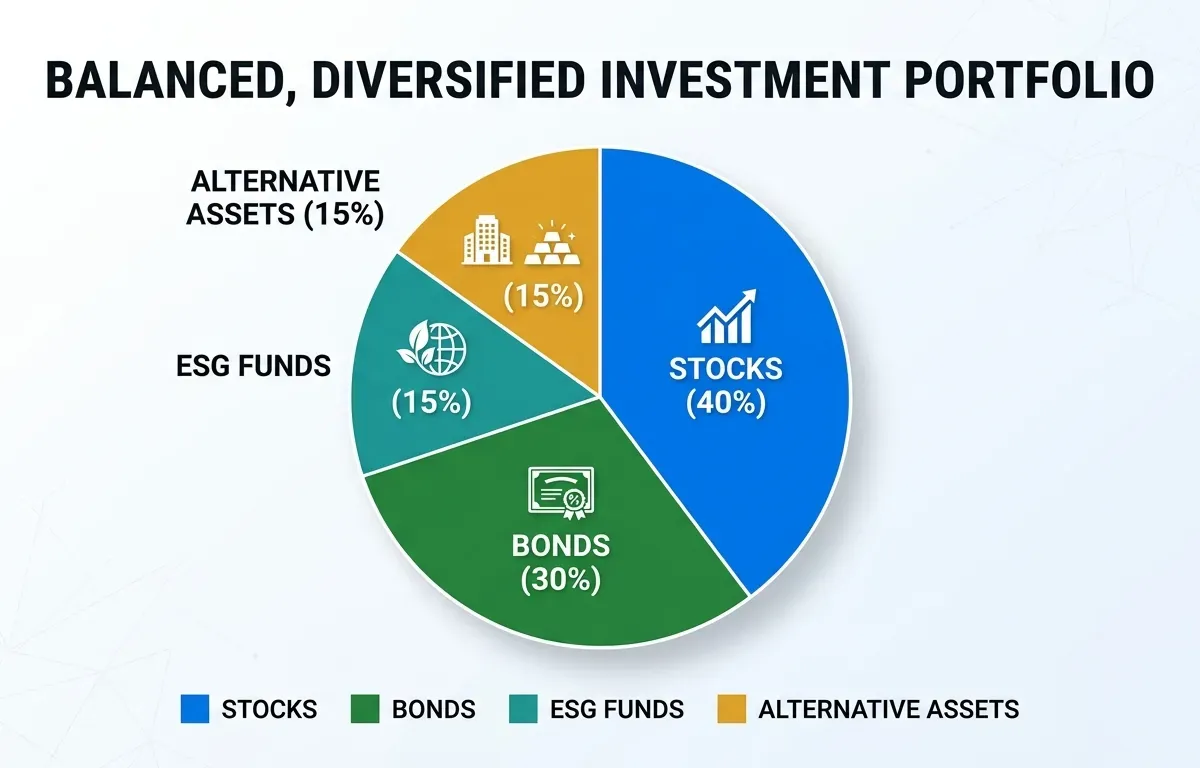
- Diversification Across Asset Classes — Spread holdings across stocks, bonds, and other assets to lower single-market exposure.
- Setting Allocation Limits — Define maximum exposures for each asset class to avoid concentration risk.
- Conducting Regular Portfolio Reviews — Periodically rebalance and adjust allocations to reflect your goals and market conditions.
Combined, these steps create a resilient framework for responding to shocks without rushed decisions.
Asset Diversification
Diversification smooths returns and reduces downside risk across market cycles.
- Incorporating ESG Factors — Use ESG screening to identify companies whose sustainability practices may lower correlation with conventional risks.
- Balanced Investment Strategies — Mix higher-growth and defensive holdings to balance return and stability.
- Utilizing Low-Cost Options — Low-cost sustainable index funds and ETFs allow broad exposure with modest capital.
Broad, cost-effective diversification positions portfolios to capture opportunities when markets reset.
Academic evidence shows certain sustainable investments can improve portfolio resilience and offer diversification advantages.
Impact Investments for Enhanced Portfolio Resilience and Diversification
The paper empirically studies the role of sustainable impact investments in strengthening portfolio resilience and risk-adjusted performance in the UK equity market from 2017 to 2022. By applying a unique dataset of impact companies affiliated with the Social Stock Exchange UK (UKSSE), the analysis applies Markowitz's modern portfolio theory, Sharpe ratio analysis, paired t-test and CAPM regression models. The findings show: (1) Adding impact stocks in portfolios demonstrate superior risk-adjusted efficiency, achieve higher annualized returns and Sharpe ratios than the FTSE All-Share benchmark. (2) The impact portfolio sustained a positive excess return (alpha) and a lower market beta, which suggests the impact portfolio provides strong diversification effects and partial independence from systemic market movements. Based on the empirical findings, asset managers and institutional investors can integrate impact-oriented assets into mainstream portfolios, seeking to align financial performance with sustainability goals.
Do impact investments enhance portfolio resilience? Evidence from UK sustainable firms, 2017
Long-Term Planning
Long-term planning prevents reactive moves in volatility. A clear roadmap and disciplined process support consistency.
- Defining Clear Financial Goals — Set measurable goals and timelines to guide allocation choices.
- Engaging in Education and Coaching — Ongoing learning and professional guidance improve decision quality.
- Developing Emotional Discipline — Stick to rules and rebalancing plans to avoid panic selling.
Keeping objectives visible helps maintain perspective when markets fall.
What Are Market Crashes and Their Impact on Sustainable Investments?
A crash is a rapid, large fall in asset prices triggered by economic, geopolitical, or financial stress. Crashes shift investor preferences and can temporarily affect ESG flows and valuations.
How Do Market Crashes Affect ESG Investing and Sustainability Risks?
During downturns, investors may favor short-term safety, which can lead to:
- Impact on ESG Investments — Temporary outflows from ESG funds as investors seek liquidity.
- Market Volatility Effects — Short-term performance swings driven by sentiment rather than fundamentals.
- Long-Term Sustainability Considerations — ESG assets often recover as long-term trends and policy support resume.
Recognizing this helps committed ESG investors maintain a long-term view.
What Are Key ESG Risk Factors During Financial Crises?
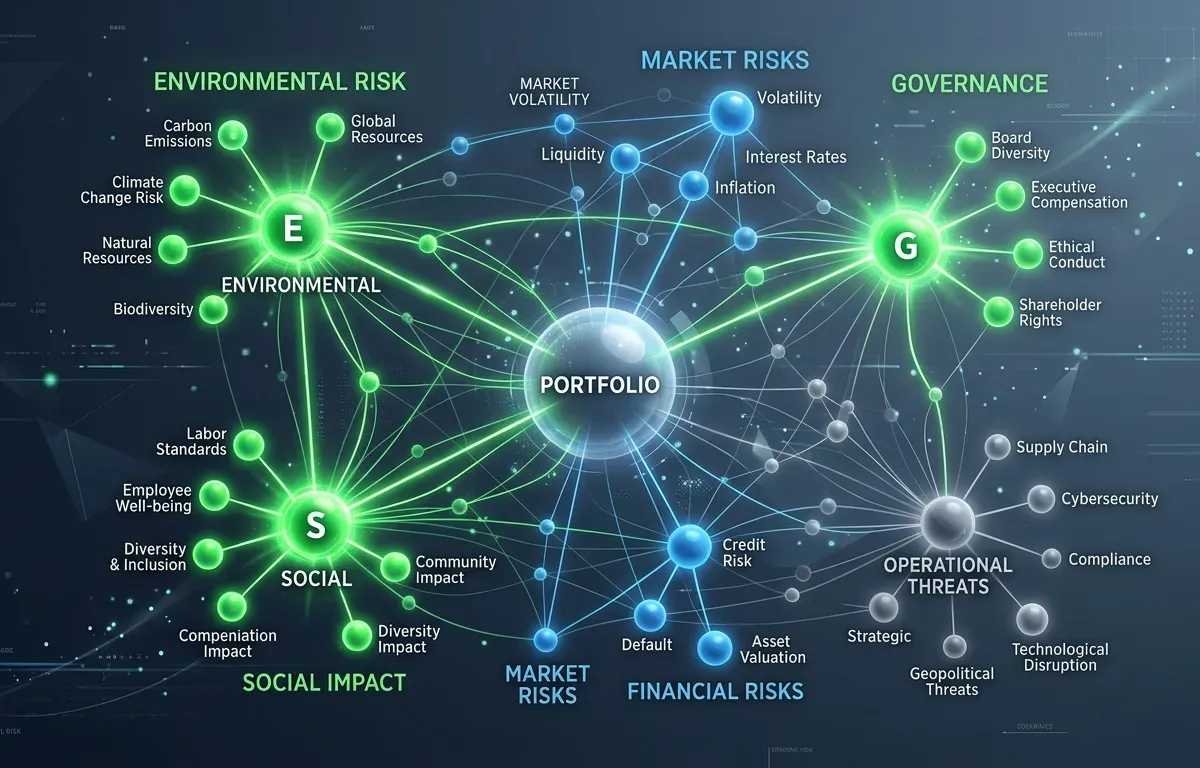
ESG risks that matter in crises include:
- Regulatory Risks — Sudden policy changes can alter the outlook for some sustainable assets.
- Market Perception Risks — Investor sentiment can quickly change demand for ESG exposure.
- Operational Risks — Firms with weak ESG practices may face heightened operational and reputational strains.
Identifying these risks supports targeted monitoring and defensive positioning.
Academic work argues that ESG should be treated as distinct risk factors in asset-pricing frameworks.
ESG as a Risk Factor in Asset Pricing Models
There are numerous risk factors in asset pricing models that have been identified over the years. In this paper, we address the question of whether factors constructed using ESG (Environmental, Social, Governance) scores could potentially meet the necessary requirements for risk factors in multifactor models. While numerous studies indicate that the ESG performance of firms could be financially material, the integration of ESG factors has so far not been fully evaluated. We pay particular attention to the problem of divergent scores across different rating providers and investigate whether the regression results of 4- and 5-factor models converge. The evaluation is carried out with Fama–French and Carhart models, extended by an additional factor representing ESG, respectively. We find that there are ESG factors across all investigated rating providers that capture common-variation in stock returns over time, indicating that ESG should be considered in common asset pricing models.
ESG as risk factor, C Klein, 2025
How To Protect Investments During Market Downturns Using Sustainable Strategies
Combine defensive positioning with ESG-aware diversification and analytics. Core steps:
- Investment Strategies for Downturns — Tilt to defensive sectors (utilities, staples) and quality businesses.
- Sustainable Portfolio Diversification — Add green bonds and SRI funds to reduce correlated downside.
- Utilizing Analytics Tools — Use ESG analytics to identify emerging risks and concentration points.
These measures help preserve capital while keeping sustainability goals intact.
What Investment Strategies Mitigate Risk in Market Volatility?
Useful strategies include holding defensive stocks, allocating to bonds for stability, and adding alternative assets to broaden sources of return.
How Can Sustainable Portfolio Diversification Enhance Resilience?
Sustainable diversification can lower portfolio volatility and improve recovery potential by spreading risk across different drivers and including assets that benefit from long-term policy trends.
Research highlights green bonds' role in improving resilience and reducing crisis risk.
Green Bonds for Portfolio Resilience and Risk Management in Crises
This study examines the interconnectedness between the green bond index (GRBI) and major financial indices, focusing on three key periods: Pre-Covid, During-Covid, and Russia-Ukraine war period. The findings reveal that GRBI consistently acts as a net receiver of shocks, significantly reducing the total connectedness index (TCI) and functioning as a spillover absorber. GRBI helps reduce systemic risk, particularly during periods of market volatility. The inclusion of GRBI enhances the delta portfolio's resilience, improving its downside risk-adjusted returns and hedging effectiveness. During crisis periods, the delta portfolio consistently outperforms the base portfolio in downside risk measures, such as lower drawdowns and improved ratios. These results highlight the crucial role of GRBI in strengthening portfolio diversification and risk management. Investors seeking to optimize portfolio performance and minimize exposure to systemic shocks should consider including GRBI, especially during periods of heightened market uncertainty.
Resilience of green bonds in portfolio diversification: evidence from crisis periods, M Gupta, 2025
What Are Government and Regulatory Responses to Market Crashes Affecting ESG Investments?
Policy and regulation shape ESG disclosures, investor confidence, and recovery dynamics. Tracking these changes is important for positioning.
How Do Regulatory Changes Influence Sustainability Disclosures During Crises?
Shifts in regulation can prompt more detailed sustainability reporting, which may improve transparency and investor trust over time.
What Role Do Government Policies Play in Market Crash Recovery?
Government interventions—stimulus, sector support, and targeted green initiatives—can stabilize markets and benefit sustainable sectors during recovery.
Which Tools and Analytics Help Assess Market Crash Risks for Sustainable Investments?
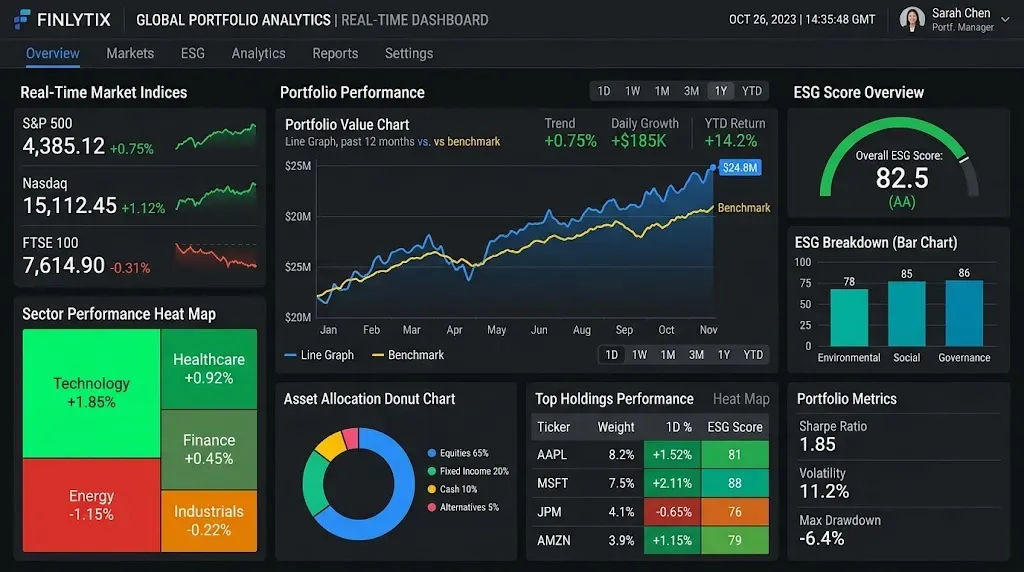
Timely analytics and visualizations reveal exposures and trends so you can act on evidence rather than emotion.
How Do Advanced Analytics Provide Real-Time ESG Risk Assessment?
Advanced ESG analytics platforms deliver near real-time ESG metrics and screens that integrate with portfolio tools to highlight emerging risks.
What Interactive Visualizations Aid Investors in Market Volatility Analysis?
Charts, heatmaps, and dashboards simplify complex ESG and volatility data, helping investors spot correlations and stress points faster.
Frequently Asked Questions
What are the signs of an impending market crash?
Warning signs include stretched valuations, rising debt levels, sustained volatility, and weakening macro indicators such as employment and consumer confidence. Use these signals to review risk exposure, not to time exact market turns.
How can I adjust my investment strategy during a market downturn?
Consider increasing allocations to defensive sectors and bonds, rebalance to target weights, and avoid reactionary selling if your time horizon allows.
What role does emotional discipline play in investing during downturns?
Discipline prevents panic selling. Establish rules, document decisions, and follow a rebalancing plan to keep emotions from driving outcomes.
How can I leverage technology to enhance my investment decisions?
Use real-time ESG screens, analytics platforms, and dashboards to monitor exposures, assess scenarios, and make evidence-based choices.
What are the benefits of sustainable investing during market downturns?
Sustainable investing can offer resilience: firms with stronger ESG practices may face fewer shocks and attract steady long-term capital as policies and norms favor sustainability.
How can I stay informed about market trends and potential crashes?
Follow reputable news, use analysis tools, subscribe to sector research, and consult advisers to maintain situational awareness and adjust strategies prudently.
Ready to Build a Stronger Investment Foundation?
Market downturns test your discipline and strategy. The good news: with the right approach—diversification, ESG awareness, and emotional discipline—you can navigate volatility and protect your wealth.
Wire Clarity specializes in financial education and investing coaching designed to help you make confident decisions, even in uncertain markets. Our live trading sessions, financial education programs, and personalized coaching equip you with the knowledge and tools to respond to market shifts with clarity instead of fear.
Ready to strengthen your investment strategy? Visit Wire Clarity's contact page to book a consultation with one of our investment coaches.
Contact us at info@wireclarity.com or visit wireclarity.com.